

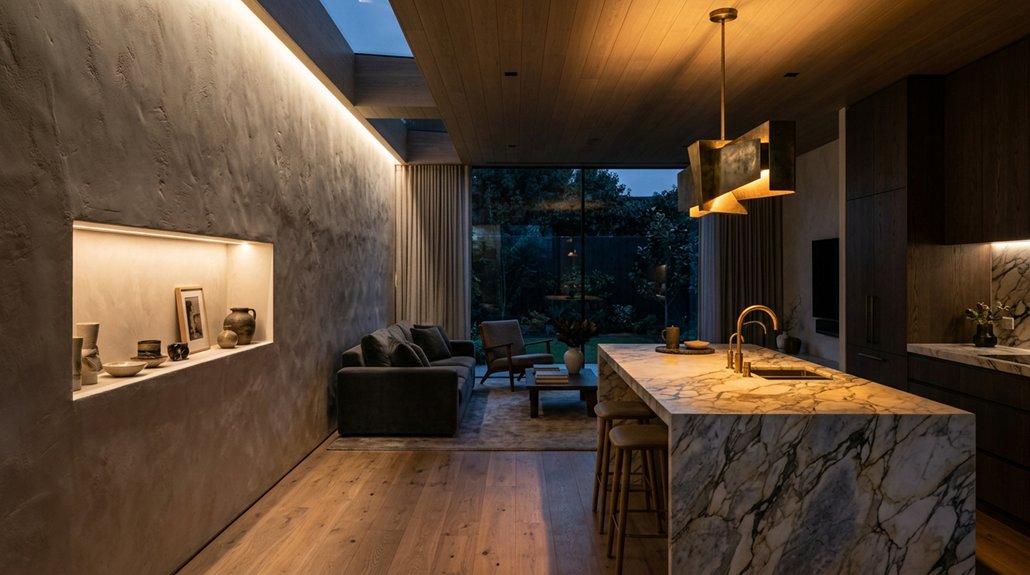
Feature lighting can turn a plain room into a warm, dramatic space that feels distinctly yours. A sculptural pendant draws the eye, while a soft wall wash brings out the grain of timber or the texture of stone. You can use focused beams for clear, comfortable tasks and dim glowing layers for relaxed evenings. Thoughtful placement shapes sightlines, highlights favorite details, and adds depth without clutter. With a few smart choices, you’ll discover how each room can take on its own character.
Key Takeaways
- Sculptural pendants, chandeliers, and floor lamps create focal points that add character and visual interest.
- Warm wall washes and grazing light reveal the texture of stone, timber, artwork, and architectural details.
- Layering ambient, task, and feature lighting adds depth while balancing beauty with practical needs.
- Dimmers and separate controls let you shift from bright, focused light to a softer, more intimate mood.
- Choosing fixtures and color temperatures to suit each room creates a cohesive atmosphere, while efficient LEDs help reduce energy use.
See How Feature Lighting Changes a Room

A sculptural pendant can turn a quiet corner into a focal point, while a warm wall wash softens hard edges and draws out the texture of brick or plaster. You feel the shift as soon as you enter: light gives familiar furniture fresh energy and makes the room seem more inviting.
Choose a vivid shade against a muted backdrop for striking color contrast, or layer amber and ivory tones to create a gentle glow. A focused pool of light can make your reading chair feel like a private retreat; a playful, glowing orb can spark conversation across the room.
With thoughtful placement, you guide the eye and shape mood enhancement without changing a single piece of furniture. Feature lighting doesn’t just brighten your space—it changes how you experience it, moment by moment.
Highlight Architecture and Decor With Light
Aim a warm beam along a textured wall, and you’ll bring its architectural lines into crisp relief.
Direct a softer glow toward a sculptural vase or framed artwork, and you’ll give each decorative feature its own moment.
With thoughtful placement, you can turn light into a quiet guide for the eye.
Accentuate Architectural Details
When light grazes a stone arch or skims the grain of a timber beam, architectural details step out of the shadows. You can use narrow-beam spotlights to reveal a column’s texture or wash a vaulted ceiling in a soft, upward glow.
Let light trace a staircase, catching each edge without flooding the room. Adjustable fixtures give you control, so you can shift emphasis as daylight fades or your needs change.
Choose a Color temperature that flatters the materials: warm tones bring out the richness of wood, while cooler light sharpens the clean lines of concrete and steel.
With dimmers and efficient LEDs, you’ll balance drama with Energy efficiency. Thoughtful placement turns structure into atmosphere, guiding your eye through the space while preserving its calm, uncluttered character.
Showcase Decorative Features
Let light turn a sculptural vase, vivid painting, or treasured collection into the room’s quiet focal point. Aim a narrow-beam spotlight at artwork to reveal brushstrokes, or wash a shelf with a soft glow that draws you toward keepsakes. Adjustable fixtures let you shift attention as your collection evolves, while dimmers help you move from crisp display to intimate evening mood.
Consider how color schemes respond to warm or cool light; a subtle change can enrich a painting or make ceramics feel newly vivid. Reveal material textures by grazing light across carved wood, woven fabric, or polished metal, letting shadows add depth.
Keep the source discreet, and your favorite objects seem to float, glow, or emerge from the room’s atmosphere—without competing with the space around them.
Choose Pendants, Chandeliers, and Wall Lights
Hang pendants where their glow gathers people without blocking your view. Choose a chandelier whose scale and style feel at home in your room.
Layer wall lights to cast a softer glow and bring depth to the space.
Pendant Light Placement
Pendant lights, chandeliers, and wall lights do more than brighten a room—they shape its mood and draw the eye. Thoughtful Pendant placement turns a kitchen island into a welcoming stage, while a pendant above a reading chair pools warm light where you need it.
Hang fixtures low enough to create intimacy, but high enough to keep sightlines clear and movement easy. Consider lighting angles, too: direct a beam onto a textured wall to reveal its grain, or soften it across a tabletop to flatter the whole scene.
Wall lights can frame a mirror, brighten a dim hallway, or cast a gentle glow beside your bed. Layer these sources with ambient light, and you’ll give each corner its own atmosphere without overwhelming the room.
Let light guide the eye naturally.
Chandelier Scale and Style
When a chandelier fits the room, it feels less like an accessory and more like its glowing centerpiece. Choose a fixture that suits both your ceiling height and the room’s visual weight.
A broad, sculptural design can anchor a generous dining area, while a delicate silhouette keeps a compact room feeling open. Let your style guide the finish: Vintage elegance brings warmth through aged brass, curved arms, and softly glowing glass.
Modern minimalism favors crisp lines and restrained forms. Consider how the chandelier looks unlit, too—it should hold the eye by day and cast inviting pools of light after dusk.
Over a table, keep its shape in proportion to the surface, so conversation and sightlines stay comfortable. Your best choice doesn’t overpower the room; it gives the space a distinct, luminous character.
Wall Light Layering
A well-layered room lets light arrive from more than one direction. Start with a pendant or chandelier to cast a welcoming glow across the room, then add wall lights to bring warmth closer to eye level. Their beams can graze textured plaster, frame artwork, or soften a hallway’s edges, giving your space depth without crowding it.
Think about how each fixture shapes Ambient shadows. A sconce beside a reading chair can create a gentle pool, while paired lights balance a long wall. Choose a Color temperature that suits the mood: warm tones invite you to unwind; cooler light sharpens a workspace.
Put fixtures on separate dimmers, and you’ll shift the atmosphere with a touch. When you layer thoughtfully, light becomes part of the room’s rhythm, not just its decoration.
Choose Feature Lighting for Each Room
Each room calls for a different kind of glow: choose a sculptural pendant to warm the dining table, a striking floor lamp to anchor the living room, or a softly lit sconce to make a hallway feel welcoming. Let each fixture reflect how you use the space and the mood you want to create.
In a bedroom, a sculptural bedside lamp can cast a gentle pool of light for winding down; in a kitchen, a vivid pendant can bring color and character to everyday routines.
Consider color temperature, too: warm tones feel restful, while cooler light can sharpen focus in a work area.
Choose a design that complements your materials, from brass against deep paint to paper shades beside natural wood.
With energy efficiency in mind, you can enjoy expressive lighting while using less power.
Make every room’s glow feel distinctly yours.
Get Fixture Size, Height, and Brightness Right
The right proportions make feature lighting feel intentional, not overwhelming. Match your fixture selection to the room’s scale: a petite pendant can disappear above a generous dining table, while an oversized shade may crowd a compact nook. Let the fixture claim attention without stealing breathing room.
Hang a dining pendant low enough to gather the table into an intimate pool of light, but high enough to keep sightlines clear. In a living area, position a sculptural floor lamp where its silhouette won’t interrupt movement. Check the view from every seat before settling on a height.
Brightness shapes the mood as much as size. Choose output that reveals texture and color without glare, then use lighting controls to soften the glow for evenings or sharpen it when you want the feature to sparkle.
Layer Feature Lighting With Ambient and Task Light
When feature lighting shares the room with ambient and task light, its glow feels woven into the space rather than staged. Let soft ceiling light establish an even foundation, then add a pendant or sculptural lamp to draw your eye toward a favorite detail.
Keep task lighting close to where you read, cook, or create, so useful brightness doesn’t compete with the room’s focal point.
Match color temperature across your layers for a calm, cohesive atmosphere, or shift it subtly to signal different moods. A warm feature light can make wood grain glow; a cooler task beam can sharpen your focus.
Put fixtures on separate dimmers, and you’ll move from lively morning clarity to intimate evening sparkle with a touch.
Choose efficient LEDs for energy efficiency without sacrificing the nuanced glow your room deserves.
Conclusion
Think of feature lighting as a lantern guiding you through your home’s story. A pendant can crown the dining table; a wall light can reveal a treasured texture; a soft glow can turn a quiet corner into refuge. Choose each fixture with care, then balance its sparkle with ambient and task light. When you shape brightness, scale, and placement, you don’t just illuminate rooms—you give them rhythm, warmth, and a sense of welcome that follows you home.
Leave a Reply