
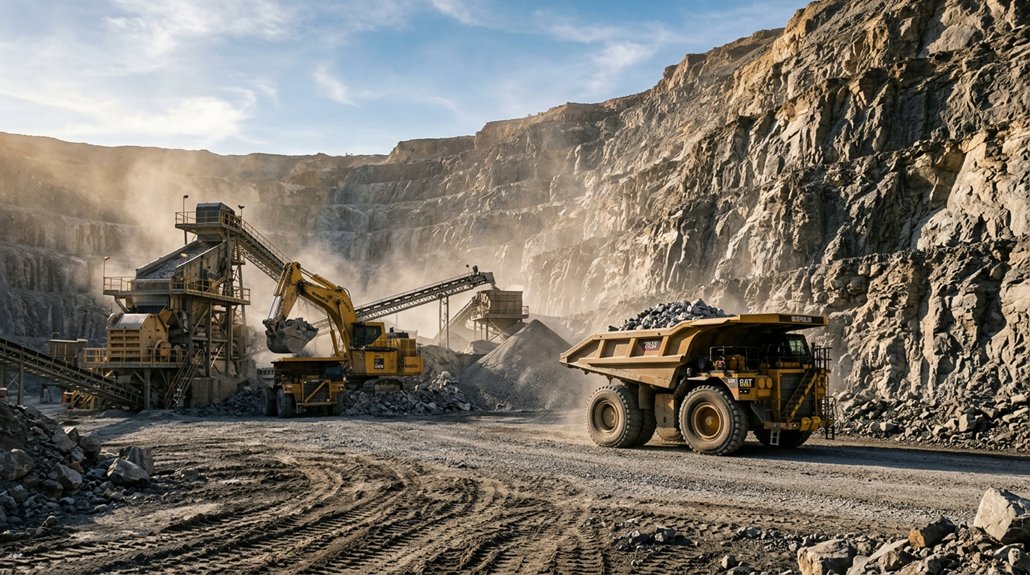
Inside a modern quarry, your construction projects begin with precise planning that matches stone quality and size to demand. Crews use controlled blasts, diamond-wire saws, and monitored equipment to extract rock safely. Crushers and screens turn it into graded aggregate for roads, concrete, and buildings, while testing confirms strength and durability. Energy-efficient machinery, dust controls, and water recycling help reduce environmental impacts. Explore how each step keeps materials moving from quarry to your next major project.
Key Takeaways
- Quarry planners match stone type, size, and strength to construction demand, coordinating processing, storage, and delivery.
- Controlled blasting, precision cutting, and real-time monitoring extract stone while reducing risks to workers and nearby infrastructure.
- Primary and secondary crushers turn quarry rock into graded aggregates for roads, concrete, and other construction uses.
- Strength, durability, and particle-size testing helps ensure stone meets project specifications and grading standards.
- Dust controls, water reuse, material recycling, and ecological restoration reduce quarries’ environmental impacts.
How Do Quarries Plan Stone Production?

Before a block leaves the quarry, the team has to know what it can become. Planners match customer demand with the stone’s color, strength, size, and intended use, from sleek countertops to road base. You benefit when that forecast aligns supply with real projects, reducing delays and unnecessary inventory.
Digital models, market data, and equipment schedules help teams map production weeks ahead. They coordinate orders, storage, processing capacity, and stone transportation so materials arrive when builders need them.
Seasonal construction trends and local infrastructure plans can shift priorities, so planners adjust quickly rather than overproduce.
They also build quarry safety into every schedule, allowing time for inspections, traffic control, and changing site conditions. Clear plans help crews work efficiently while protecting people and preserving usable stone.
The result: more predictable deliveries, less waste, and materials that fit your project from the start.
How Do Crews Extract and Break Quarry Rock?
Once crews mark a safe extraction zone, they free rock from the quarry face using methods suited to its strength and intended use. If you’re picturing a single dramatic blast, today’s approach is more controlled. Blasting techniques use carefully planned boreholes and measured charges to loosen stone while limiting vibration, noise, and flyrock.
Crews monitor each shot, then inspect the face before work continues.
Where precision matters, Rock cutting offers another route. Diamond-wire saws and advanced drills can separate large blocks with clean edges, helping preserve stone for architectural finishes and other high-value uses. Operators choose equipment based on geology, site conditions, and the final product customers need.
Remote controls, sensors, and real-time monitoring increasingly support safer, more consistent work. You get stone extracted with less waste and a smaller footprint, without compromising quarry-worker safety.
How Does Quarry Rock Become Aggregate?
After crews free rock from the quarry face, crushers turn it into aggregate for roads, concrete, and other projects. You’ll see the process begin with a primary crusher that reduces large pieces to manageable sizes.
Conveyors then move the material to secondary crushers, which refine it further while screens separate particles by size. Some rock circles back for another pass, helping producers use more of each load and reduce waste.
Modern systems can adjust output to match demand, from road base to concrete ingredients. Stone transportation matters, too: conveyors and carefully planned truck routes keep material moving efficiently from the face to processing and shipping areas.
Throughout each step, quarry safety depends on clear procedures, maintained equipment, and trained crews. The result is versatile aggregate ready for construction.
How Do Quarries Test and Grade Stone?
To guarantee every load performs as expected, quarries test stone for strength, durability, and particle size. Technicians crush samples, measure their resistance to wear, and check how particles hold up under moisture and temperature changes. These tests reveal whether stone quality meets the demands of its intended specification.
Quarries also screen aggregate through calibrated sieves, separating particles by size and shape. Automated sensors can speed checks and flag inconsistencies, while lab teams verify results against grading standards. You benefit from this quality control through more predictable material, clearer product information, and fewer surprises when ordering.
Ask suppliers for test data and grading details so you can compare options confidently. Consistent testing helps quarries deliver reliable batches, adapt to tighter project requirements, and support smarter purchasing decisions as construction expectations evolve.
Where Is Quarry Stone Used in Construction?
From foundations to finished landscapes, quarry stone supports nearly every stage of construction. You’ll find crushed stone beneath roads, railways, and building slabs, where it creates stable bases and helps manage drainage. Larger blocks anchor retaining walls, bridges, and waterfront structures.
While cut stone adds strength and character to façades, steps, and interior features. Your project’s needs shape the choice: granite suits high-traffic surfaces, limestone brings warmth to cladding, and aggregate blends into concrete and asphalt.
Stone durability helps you invest in structures designed to withstand daily wear and changing conditions. For outdoor living, paving, garden walls, and pathways turn practical spaces into polished extensions of your home.
Today’s designers pair varied finishes and local colors to make Quarry aesthetics feel contemporary, connecting modern builds with their surroundings while giving you lasting, distinctive results.
How Do Quarries Reduce Environmental Impact?
Quarries can supply essential building materials while reducing their environmental footprint through careful planning and modern practices. When you choose stone, ask how its producer manages energy, water, dust, and transport.
Efficient electric equipment, cleaner fuels, and optimized delivery routes can cut emissions, while covered conveyors and misting systems help control dust.
Closed-loop water systems capture and reuse process water, protecting nearby supplies.
Recycling initiatives turn suitable offcuts and returned materials into aggregate, reducing waste and demand for newly extracted resources.
Progressive ecological restoration reshapes worked areas as operations advance, supporting native plants, wildlife, and healthier landscapes.
Digital monitoring can track energy use and environmental conditions, helping operators respond quickly and share credible progress.
These practical steps make responsible quarrying part of a smarter, more transparent construction supply chain for your project.
Conclusion
The next time you pass a new road, bridge or building, notice the stone beneath it. By coincidence, the quarry behind that project may also supply the driveway, sidewalk or transit upgrade you use every day. That connection isn’t accidental: careful planning, extraction, testing and environmental controls turn local rock into reliable infrastructure. When you choose a home, travel a route or follow a development project, you’re seeing quarry production at work—and shaping demand for smarter, more sustainable construction.
Leave a Reply