

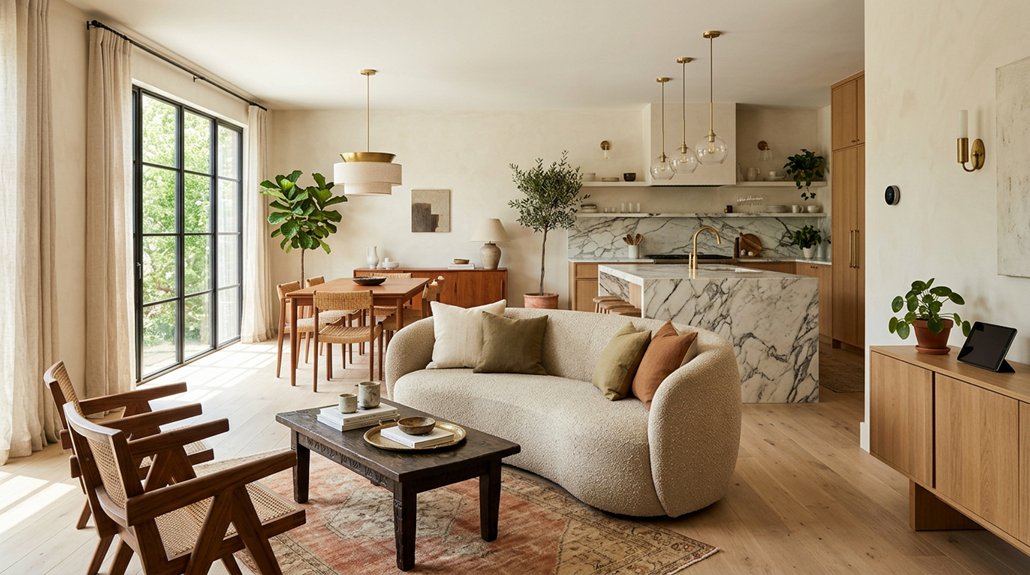
Today’s biggest interior renovation trends help you create a warmer, more adaptable home. Bring in reclaimed wood, stone, and other tactile natural materials, then pair them with creamy neutrals, earthy greens, and softly layered lighting. Flexible layouts, movable partitions, and multi-use furniture let you reshape rooms as your needs change. Smart controls, wellness-minded spaces, and energy-saving upgrades add comfort without sacrificing character. Explore how these ideas can transform your home, one thoughtful detail at a time.
Key Takeaways
- Natural, sustainable materials: Homeowners favor reclaimed wood, cork, stone, low-VOC finishes, and other durable materials with tactile character.
- Warm, layered interiors: Earthy neutrals, muted greens, contrasting dark accents, and layered lighting create inviting, adaptable moods.
- Flexible, multifunctional spaces: Modular furniture, movable partitions, and smart storage help rooms adapt to changing needs.
- Smart, energy-efficient upgrades: Connected controls, efficient appliances, improved insulation, and water-saving fixtures boost convenience and reduce resource use.
- Wellness and comfort at home: Acoustic treatments, restful lighting, and dedicated spaces for reading, relaxation, or movement support everyday well-being.
What Natural Materials Warm Up a Home?
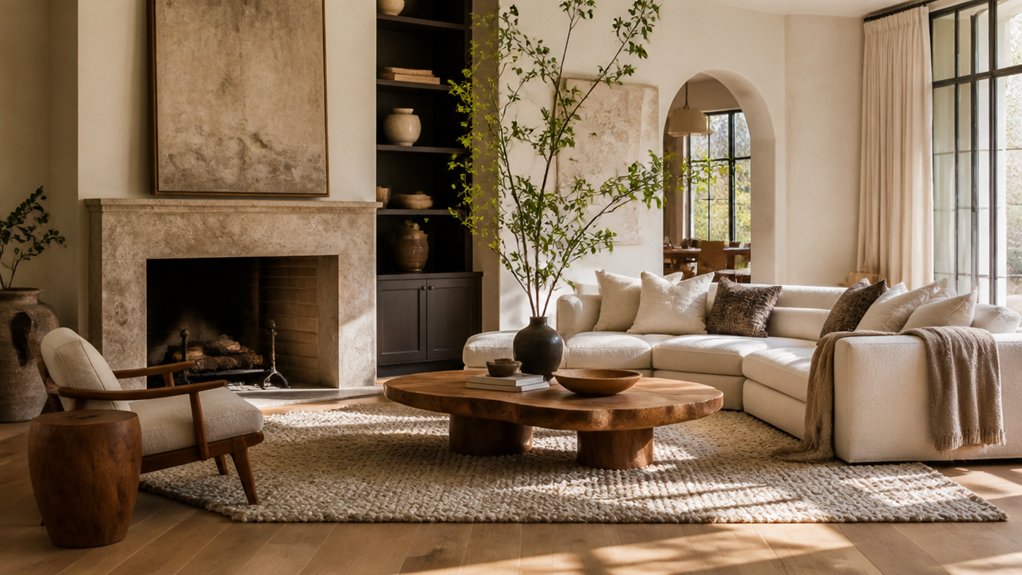
Natural materials bring warmth to a home through texture, tone, and the traces of their origins. You can layer oak, reclaimed timber, and bamboo to give floors and cabinetry a tactile, lived-in character.
Let stone add a cool, sculptural counterpoint: a rough-hewn hearth or honed countertop makes everyday rituals feel grounded.
For Eco friendly finishes, try limewash, clay plaster, or plant-based oils; each lets subtle surface variation tell its own story.
Organic textiles—linen, wool, and hemp—soften the mix without making it feel precious.
You might pair a chunky wool throw with sleek cork panels or weave rattan into unexpected details, such as a pendant or cabinet front.
Choose materials you can touch, repair, and enjoy as they age; their evolving patina gives your rooms depth and personality.
Which Colors and Finishes Feel Timeless?
Warm neutrals—think oat, clay, and soft olive—give your rooms a rich, flexible base. Pair them with natural finishes like oiled wood, honed stone, or brushed metal, and you’ll add texture that ages gracefully.
Try an unexpected contrast, such as creamy walls with dark timber, to keep the look fresh without chasing trends.
Warm Neutral Palettes
As interior trends shift, warm neutral palettes keep rooms grounded without feeling predictable. You can build a flavorful base with creamy ivory, toasted oat, soft clay, and mushroom taupe, then turn up the contrast with espresso or muted olive. These shades feel current yet won’t date your renovation when trends swing.
Give the palette a little edge by pairing warm whites with dusty rose or ochre in a single accent. Choose matte paint for a soft, enveloping backdrop, and use satin on trim to catch light without adding glare.
Artisan craftsmanship brings character through hand-finished details, while Vintage accents—like a brass lamp or a carved wood frame—add a collected note. Let texture and subtle shifts in tone do the talking, so your rooms feel layered, inviting, and unmistakably yours.
Natural, Lasting Finishes
When you want finishes that outlast a trend, start with materials that age beautifully: oak, stone, limewash, and unlacquered brass. Their appeal comes from subtle shifts in grain, patina, and light—not a perfect, showroom sheen.
To keep your palette timeless, pair warm wood with chalky whites, soft clay, or muted olive. These shades feel grounded, yet they leave room to experiment with a bold accent or a surprising mix of materials.
Choose eco-friendly finishes, such as low-VOC paints and responsibly sourced timber, to make thoughtful choices without sacrificing character.
Let handcrafted textures bring depth: a troweled wall, a veined stone counter, or a brushed-metal handle can make a familiar room feel personal. When you embrace natural variation, your finishes don’t merely follow a trend; they grow richer as you live with them.
How Can Flexible Layouts Fit Changing Needs?
Flexible layouts let your home shift with you, whether you need a quiet work zone today or room for a lively dinner tomorrow. Think of your floor plan as a recipe you can remix, not a fixed menu.
Sliding partitions, pocket doors, and movable screens give you control over openness, privacy, and flow without locking you into one arrangement. These adaptive spaces can expand for celebrations, then settle into calmer rhythms when your week gets busy.
Choose lightweight furniture and modular storage you can rearrange as your priorities change. A dining table might move closer to the window for brighter mornings, while a screen can soften the view of household clutter.
With thoughtful circulation and a few flexible anchors, you’ll create multi-use areas that feel fresh, personal, and ready for whatever comes next.
What Makes a Room Work for More Than One Purpose?
To make one room shift from work mode to unwind mode, choose flexible furniture that moves as easily as your plans.
Define each zone with a bold rug, lighting, or color cue, then keep clutter in check with smart storage.
You’ll get a space that feels intentional, not improvised.
Flexible Furniture Choices
A room that shifts from office to guest suite needs furniture that can keep pace. Choose a sleek sofa bed with a supportive mattress, so you can welcome overnight guests without sacrificing daytime comfort.
A drop-leaf table expands for dinner, then folds away when you need elbow room for work. Nesting stools bring extra seating when friends arrive and tuck neatly aside afterward. These pieces make multipurpose furniture feel intentional, not improvised.
Look for adaptable living solutions with light frames, casters, and finishes that suit your palette. A storage ottoman can hold blankets, serve as a footrest, or become a quick perch.
Try a modular lounge you can rearrange as your needs change. When each piece earns its footprint, you gain room to experiment, host, focus, and unwind—without asking your home to choose just one role.
Clearly Defined Zones
How can one room handle work, meals, and downtime without feeling scattered? Give each activity a clear visual address. In Open Floorplans, you can define zones with a rug beneath the lounge area, a pendant over the dining table, or a bold paint block behind your desk. These cues create rhythm without building walls or dimming the room’s airy feel.
Think of color, light, and texture as your zoning toolkit. Pair a warm, tactile finish in the relaxation corner with crisp surfaces where you work; shift lighting to signal a change in pace.
Modular Design lets you adapt these boundaries as your routine evolves, so a table can host dinner tonight and creative projects tomorrow. Keep sightlines open, repeat a few tones, and your multipurpose room will feel cohesive, intentional, and alive.
Smart Storage Solutions
Where does a room’s extra purpose go when the day is done? Into a cabinet, bench, or wall that keeps your living space ready for its next act. Smart storage lets your home shift from office to dining room, or play zone to guest suite, without leaving yesterday’s setup on display.
Choose innovative storage that earns its footprint: a fold-down desk behind a paneled door, a coffee table with room for board games, or a window seat that swallows spare linens. Hidden compartments can tuck chargers, craft supplies, and work gear out of sight, so each *transition* feels effortless.
Carry color and texture through these pieces, too. Fluted fronts, warm wood, and saturated paint make practical storage feel intentional. When everything has a landing spot, you can reset the room quickly—and enjoy its next purpose.
Which Smart Home Features Simplify Daily Life?
Smart-home upgrades are moving beyond novelty to make everyday routines feel smoother and more personal. With voice controlled lighting, you can shift a room from bright task mode to a warm evening glow without reaching for a switch. Smart bulbs also let you tune color and schedules to suit your space, while keeping controls simple for guests.
Automated security adds quiet confidence to your daily rhythm. A connected doorbell, smart locks, and motion alerts help you check who’s at the door and secure entry points from your phone. Pair them with sensors that flag leaks or open windows, and you’ll catch small problems sooner.
Smart thermostats can learn your preferred settings and adjust when you leave, trimming needless heating or cooling. Choose devices that work together, respond reliably, and feel intuitive—not another screen demanding your attention.
How Can Renovations Support Everyday Wellness?
A wellness-minded renovation can make your home feel calmer, brighter, and more restorative. Start with mindful design that tunes each room to your routines: soften harsh lighting with layered lamps, open sightlines to daylight, and choose tactile finishes that invite a pause.
A quiet reading nook, a spa-like shower, or a stretch-friendly corner can turn overlooked space into wellness spaces that feel personal, not clinical. Bring in color with intention—muted greens can settle a busy bedroom, while warm clay tones add energy to a kitchen.
You might also use acoustic panels, plush rugs, or curtains to hush distracting noise. Let comfort guide the experiment: test textures, dimmers, and seating before committing.
When your home supports rest, focus, and movement, everyday rituals feel less rushed and more rewarding.
What Sustainable Upgrades Belong in a Renovation?
When you renovate, sustainability can look stylish without sacrificing comfort. Choose eco-friendly materials with texture and character: reclaimed oak, cork flooring, recycled-glass counters, or low-VOC paints in earthy, spice-inspired shades. These choices bring warmth and a lighter footprint to your rooms.
Upgrade what’s behind the finish, too. Better insulation, sealed drafts, and efficient windows help you keep indoor temperatures steady without overworking your heating and cooling systems.
Add water-saving fixtures that still deliver a satisfying shower, plus durable appliances that use less power.
For a bolder move, explore renewable energy with rooftop solar or a heat pump, if your home and budget suit the switch.
You’ll create a renovation that feels current, tastes distinctly yours, and supports more thoughtful living—without making sustainability feel like a compromise.
How Does Layered Lighting Change a Room?
Layered lighting gives a room depth, warmth, and flexibility by combining ambient, task, and accent lights. You can shape room ambiance like a recipe: start with a soft overhead glow, then add focused task lighting where you read, cook, or work. Finish with accent lights that spotlight art, textured walls, or a favorite architectural detail.
This mix lets you shift the mood without changing the room. Dim warm pendants for a relaxed evening, brighten a countertop for meal prep, or use a sculptural lamp to add a playful focal point. Smart controls make those changes effortless, while varied shades and finishes bring another layer of personality.
Try mixing vintage-inspired sconces with sleek LEDs, or pairing hidden strips with statement fixtures. When you balance brightness, color, and placement, your space feels more inviting, expressive, and ready for every moment.
Conclusion
The biggest renovation trend isn’t choosing between beauty and practicality—it’s bringing them together. Picture warm wood beside sleek smart controls, flexible rooms grounded by timeless finishes, and layered lighting that shifts from lively mornings to restful evenings. Sustainable materials and wellness-minded upgrades add substance beneath the style. You don’t need to chase every new look; choose details that make your home feel current today and comfortable for years to come. The best renovation feels fresh, yet unmistakably yours.
Leave a Reply