
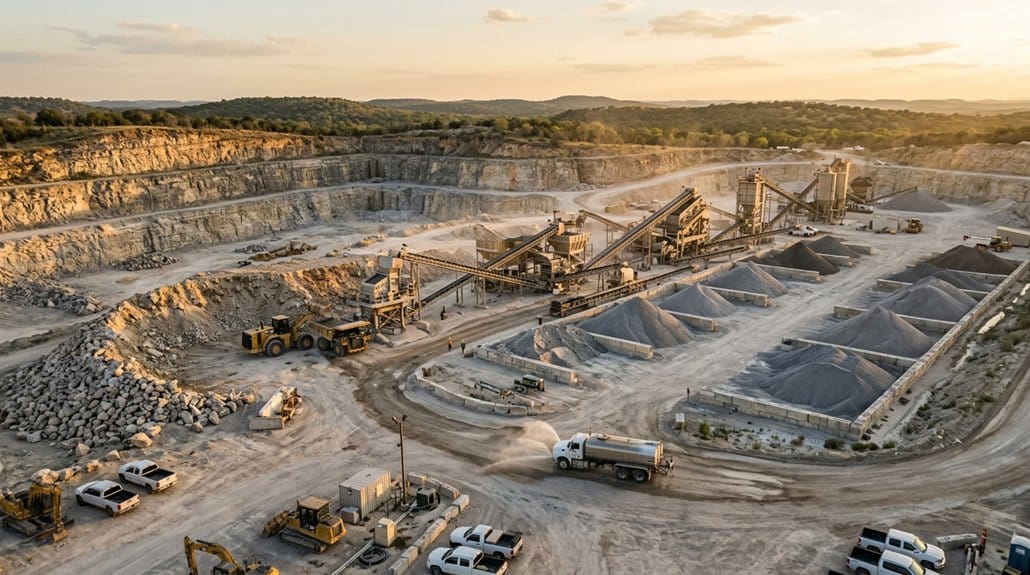
You’ll maximise quarry output by matching crushers and screens to your rock, product sizes, and feed conditions. Track cycle times, queues, downtime, and quality results to spot bottlenecks before they choke material flow. Balance crusher output with screen capacity, tune settings to limit recirculation, and keep trucks, loaders, and stockpiles moving in sync. Inspect, calibrate, and repair equipment before wear becomes failure. With smarter water and energy controls, you’ll also uncover practical ways to produce more with less.
Key Takeaways
- Identify bottlenecks by tracking cycle times, downtime, and material flow across every production stage.
- Match crushers, screens, conveyors, and haul trucks to material characteristics and required output.
- Balance feed rates and synchronize equipment to reduce pile-ups, recirculation, and idle time.
- Monitor product quality and process trends, adjusting equipment settings and stockpile blending promptly.
- Prevent downtime through regular inspections, calibrated controls, accessible spare parts, and safe post-repair testing.
Find and Fix Your Quarry’s Production Bottlenecks
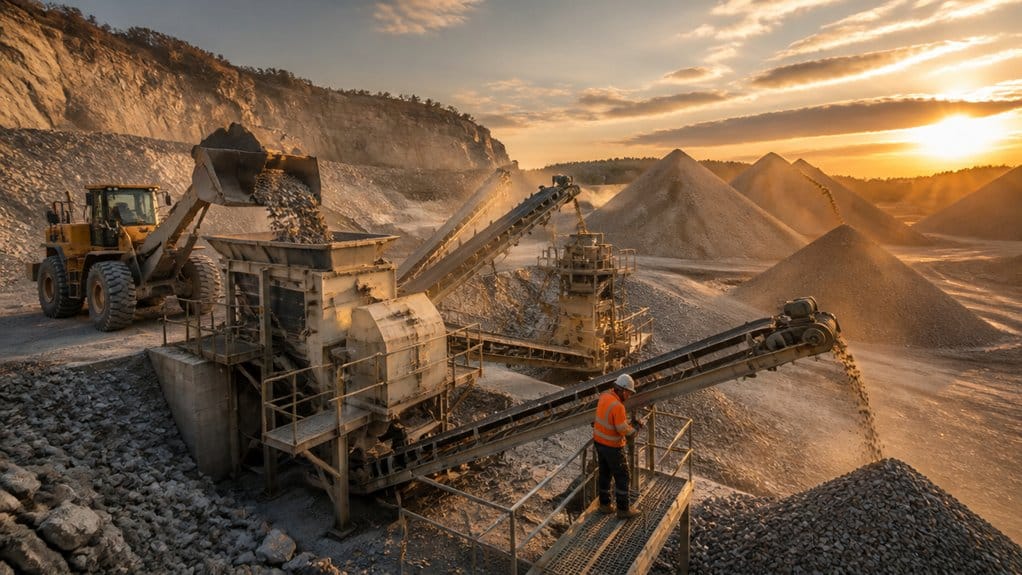
When trucks queue at the crusher, belts run half-empty, or stone piles up between stages, your quarry’s bottleneck is costing you production.
Trace the delay through each handoff, from the first blast to the final stockpile. Record cycle times, belt loads, downtime, and material flow; compare shifts to spot recurring slowdowns, not just today’s symptoms.
Listen for a crusher’s uneven pulse, watch for surges at transfer points, and check where operators wait. Then adjust schedules, clear handoff conflicts, and balance feed rates across the process.
Use workforce training to help crews recognize warning signs and report them early. Keep Safety protocols in every inspection and maintenance task, so faster fixes don’t create new hazards.
Review results after each change: shorter queues, steadier belts, and cleaner flow show whether you’ve removed the constraint—or merely moved it.
Choose Quarry Equipment for Your Rock and Products
Listen to your rock: hard, abrasive stone demands different crushers and wear parts than soft, friable material.
Then define the products you need—gradation, shape, and fines content—to guide your screen and conveyor choices.
Match both, and your plant turns raw stone into saleable aggregate with less waste. This is when experienced suppliers of crushing machinery can provide effective advice on the right tool for the job.
Match Equipment to Rock
Which crusher belongs in your quarry depends on the rock beneath your feet and the product you need. Read the stone before you choose the machine: granite rings hard against steel, while softer limestone yields with less force. Check rock suitability through hardness, abrasiveness, moisture, and fracture patterns. These traits shape wear, throughput, and the crushing action your operation can sustain.
Match the machine to the material’s behavior. A jaw crusher handles tough, coarse feed; an impact crusher can work well with softer, less abrasive rock. For highly abrasive stone, consider compression-based crushing to limit wear.
Confirm equipment compatibility across the whole circuit, from feed size to conveyor capacity, so one bottleneck doesn’t choke the flow. Sample representative faces, review wear data, and test settings before committing. Your best choice fits the quarry’s geology, not a catalogue’s promise.
Consider Product Requirements
Once the rock suits the crusher, define the product it must make. Specify target sizes, gradation, shape, and fines content before you choose the next machine.
A road base needs a different blend from clean drainage stone; your screen decks and crusher settings should reflect that difference. Check Market demand, too. Contractors may want several sizes, while concrete producers need consistent, tightly controlled aggregate.
With Product customization, you can adjust settings or add screening stages to serve changing orders without sacrificing throughput. Watch the material as it moves: sharp edges, dusty fines, and uneven piles reveal whether your process meets the brief.
Select equipment that lets you switch products efficiently, hold quality steady, and limit recirculation. When specifications change, you’ll respond quickly rather than rebuild your whole circuit.
Balance Quarry Crushing and Screening
When crushers and screens work in sync, rock moves through the plant in a steady, controlled flow instead of piling up or slipping through unfinished. Match crusher output to each screen’s capacity, and you’ll keep the belt moving without flooding the deck.
Watch the stone’s texture and listen for changes in the machinery’s rhythm: uneven feed can signal a mismatch before piles form. Adjust settings to produce the sizes your market needs, then use ideal screening to separate material cleanly and return oversize rock for another pass.
Equipment calibration helps you maintain consistent cuts as feed conditions shift. Track throughput and product gradation together; a fast crusher means little if screens can’t sort its output.
With balanced stages, you’ll reduce recirculation, limit wasted motion, and deliver dependable aggregate.
Prevent Downtime With Quarry Equipment Maintenance
Balanced crushing and screening keep aggregate moving; disciplined maintenance keeps the plant running. You’ll hear a bearing’s faint rasp before it becomes a costly roar, so train your crew to notice changes in vibration, temperature, and sound.
Schedule Preventive inspections around operating cycles, checking belts, guards, lubrication points, screens, and fasteners before wear turns into failure. Record findings, assign repairs, and track recurring faults; clear records help you replace guesswork with timely action.
Use Equipment calibration to keep sensors, scales, and control systems accurate. Verify readings against known standards, then adjust settings before small errors distort production or strain machinery.
Keep critical spares accessible, and give technicians current service instructions. After each repair, test the equipment under controlled conditions and confirm safety devices respond correctly.
These habits protect uptime, extend component life, and let you plan maintenance rather than react to breakdowns.
Move Material Efficiently From Face to Stockpile
A steady flow from the quarry face to the stockpile starts with a haul route that matches your equipment and material. Keep grades manageable, curves broad, and surfaces firm so trucks maintain traction and carry loads without jolting.
Separate traffic where possible; clear sightlines and marked passing points help you avoid bottlenecks and collisions. Match truck capacity to loader output, then coordinate dispatch with crusher demand to prevent queues at either end.
For efficient Material transport, inspect routes for loose rock, ruts, and spillage, and fix hazards before they slow your cycle. Use payload data and travel times to spot underused equipment or recurring delays.
At the destination, build Stockpile management into each delivery: direct loads to the correct pile, control tipping points, and shape layers consistently. You’ll protect material quality, simplify reclaiming, and keep production moving.
Cut Water and Energy Use in Quarrying
Cut water and energy use by targeting the steps that consume the most: wet dust suppression, washing, pumping, and crushing. Capture runoff in lined settling ponds, then use Water recycling to return clarified water to sprays and wash circuits. Fit nozzles that deliver fine, even coverage, so you suppress dust without soaking haul roads or wasting flow. Check for leaks; a steady drip can drain a system unnoticed.
For energy conservation, match pump speed to demand with variable-frequency drives, and shut idle equipment down promptly. Keep crusher settings and feed rates suited to the rock, reducing needless recirculation and motor strain. Maintain screens, belts, and bearings; smooth movement cuts friction, heat, and noise.
Schedule high-load tasks thoughtfully, and track water and power use by process. You’ll spot waste early and protect scarce resources.
Track Quarry Output and Aggregate Quality
As stone moves from face to stockpile, track tonnage and quality at each stage to catch drift before it reaches customers. Weigh trucks and log crusher throughput in real time; sharp dips can signal a blocked screen, worn liner, or changing feed. Pair these readings with belt scales and stockpile surveys, so you can reconcile production rather than guess.
Use Geological assessment to map seams, anticipate shifts in hardness, and guide extraction toward consistent material. Sample each product stream for gradation, moisture, and contaminants. A quick sieve test reveals whether fines are creeping upward; a clean, labeled sample keeps comparisons honest.
Build Quality assurance into every shift: set tolerances, record results, and flag outliers before loading. When trends turn, adjust screens or blend stockpiles. You’ll deliver reliable aggregate and protect saleable yield.
Conclusion
Your quarry’s next gain may be hiding in a bottleneck you haven’t measured—or in a screen, conveyor, or maintenance check you’ve overlooked. Track output and quality, listen for changes in the plant’s rhythm, and follow material from face to stockpile. Then adjust equipment, water, and energy use with purpose. Each improvement can release more saleable aggregate, but only if you keep watching. The numbers will reveal whether your next shift brings a breakthrough—or exposes the next constraint.
Leave a Reply