

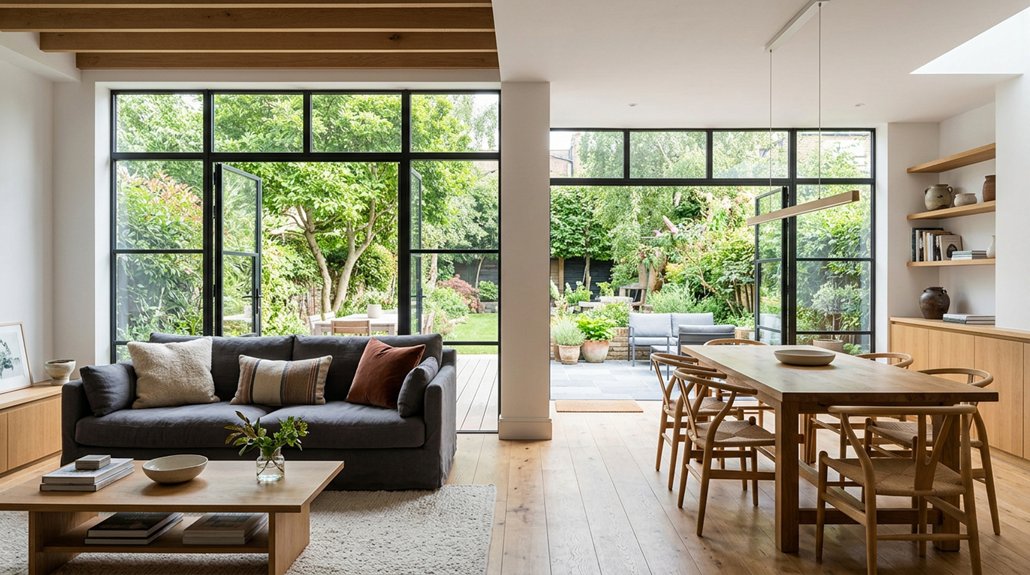
To turn a tired property into a contemporary family home, start by setting priorities around your family’s routines, then inspect for structural, moisture, wiring, and plumbing issues. Build a realistic budget with a 10–20% contingency, check permits, and plan a phased schedule. Improve insulation, heating, and ventilation before choosing durable, low-VOC finishes in colors and textures that suit the home’s character. Add flexible lighting and tailored storage, and you’ll create a healthier, more functional space—with practical steps ahead to guide the transformation.
Key Takeaways
- Assess the property thoroughly, checking for structural damage, moisture, outdated wiring, plumbing issues, and hazardous materials before finalizing plans.
- Set priorities and a realistic budget, including a 10–20% contingency, and obtain quotes, permits, and contractor input early.
- Plan layouts around family routines, balancing open gathering areas, quiet retreats, practical storage, and safe circulation.
- Upgrade insulation, heating, ventilation, and lighting for a healthy, comfortable, energy-efficient home.
- Choose durable, low-maintenance finishes and cohesive colors, then test fixtures, hardware, and controls before moving in.
Set Your Old House Renovation Priorities
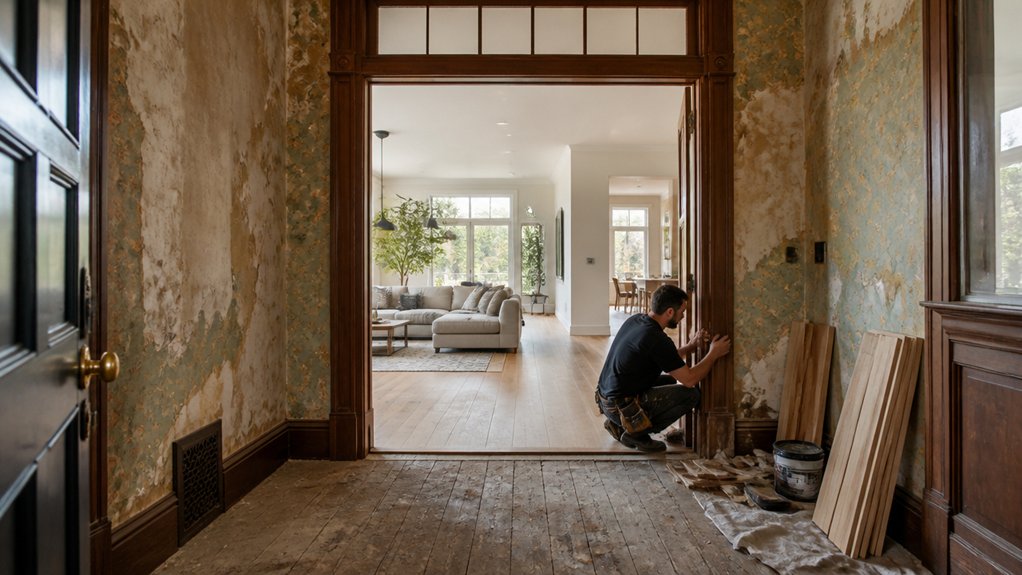
Before choosing finishes, decide what your old house needs most. Picture how your family moves through each room, then rank changes by daily impact. A hardworking kitchen, flexible dining nook, or quiet work corner may matter more than a dramatic statement wall.
Set a realistic budget, reserve a cushion for surprises, and choose a few upgrades that deliver lasting comfort.
Let the house’s character guide your palette. Historical preservation doesn’t mean freezing every detail; it means protecting the features that give your home its soul, from original trim to graceful stair rails.
Pair those details with contemporary lighting, tactile fabrics, and fresh, flavorful color. Aim for aesthetic consistency across rooms, not a showroom-perfect match.
When you prioritize function, character, and a clear design direction, every choice feels intentional—and your renovation grows into a home that suits you.
Inspect the House for Hidden Problems
Once you’ve set your priorities, look beneath the old house’s charm for problems that could reshape the plan. A polished kitchen means little if a hidden leak is quietly undermining the floorboards.
Walk every room with a sharp eye, checking ceilings, corners, window frames, and skirting for stains, cracks, soft spots, or peeling finishes. These clues can reveal hidden damages behind fresh paint or stylish panelling.
Don’t dismiss musty smells: they often point to moisture issues, poor ventilation, or a roof that needs attention.
Bring in qualified specialists to inspect wiring, plumbing, foundations, roofing, and materials such as asbestos. Ask them to explain what they find and how each issue could affect your design choices.
A thorough inspection gives you a reliable picture of the house before you commit to layouts, finishes, or ambitious upgrades.
Set a Budget and Contingency Fund
With the inspection findings in hand, set a renovation budget that covers essentials first, from structural repairs to the family-friendly upgrades you’ve been dreaming about. Give each project a clear cost limit, then rank wants by daily impact: a hardworking kitchen island may beat a statement light, while built-in storage can tame busy family life.
Get several quotes for major work, compare materials, and track every choice in a simple budget planning sheet. Include design fees, delivery, temporary accommodation, and the small costs that add up, such as fixtures and finishes.
Set aside contingency funds—typically 10 to 20 percent of your total—for hidden damage or price changes. Keep that reserve separate, review spending weekly, and adjust optional upgrades before essentials.
A flexible plan protects your vision without letting costs take over.
Check Permits and Building Rules
A well-planned budget needs a rulebook, too: check local permits and building codes before work begins. Your town’s requirements can shape the renovation’s scope, schedule, and cost, so contact the planning and building departments early.
Ask which zoning regulations apply, especially if you’re changing the property’s footprint, use, or exterior. Then confirm whether structural work, electrical upgrades, plumbing changes, or window replacements need approval or inspections.
Gather drawings, contractor details, and property records before you submit permit applications. Clear, complete paperwork can help prevent delays and costly redesigns.
Don’t assume a previous owner’s work meets current standards; ask officials how to handle anything undocumented. If your home sits in a historic district or an HOA, check those rules, too.
Keep approvals and inspection records together, and schedule required inspections before covering completed work.
Plan a Family-Friendly Renovation Layout
Before choosing finishes, map how your family moves through the home each day. Track busy routes from the entry to the kitchen, bedrooms, and backyard. Then shape your layout around real routines, not a showroom fantasy.
Create open space where everyone gathers, but give noisy and quiet activities distinct zones. A kitchen island can anchor cooking, homework, and quick snacks; a nearby nook offers a calmer perch for reading.
Think beyond today, too. Flexible rooms can shift from playroom to study as your children grow.
Make room allocation deliberate: prioritize storage near the places you use it, and give each family member a spot to retreat. Keep sightlines clear where supervision matters, while using shelving or color to define areas without closing them off.
Your best plan feels effortless, welcoming, and ready for life’s next chapter.
Repair the Structure, Roof, and Utilities
Once you’ve settled the layout, tackle the hidden essentials before choosing finishes. Start with a thorough survey: hairline cracks, sagging floors, or sticky doors can signal movement that needs expert attention. Foundation reinforcement may protect your home’s long-term stability, while sound joists and lintels keep new open-plan spaces safe.
Next, inspect the roof for slipped tiles, tired flashing, and leaks; repair them before rain reaches fresh plaster or treasured furniture.
Bring utilities up to date while walls are accessible. Plan electrical rewiring around how your family actually lives, from charging stations and layered lighting to smart controls that feel intuitive, not showy. Replace failing pipes and check drainage, too.
Keep a clear record of repairs and certifications. With the bones secure and services dependable, you’ll create a resilient canvas for contemporary family life—not just a polished first impression.
Improve Insulation, Heating, and Ventilation
Now that you’ve secured the structure and utilities, give your home a comfort upgrade with high-performance insulation.
Modern heating and ventilation systems can trim energy use while keeping every room fresh and evenly warm. Choose smart controls and efficient designs to make everyday comfort feel effortless.
Upgrade Thermal Insulation
A tired home can feel fresh without looking different: upgrade its insulation, heating, and ventilation to make every room more comfortable and energy-efficient.
Start with a thermal survey to spot heat loss through the roof, walls, floors, and older windows. Then choose insulation materials that suit your home’s construction, local climate, and renovation budget.
Recycled cellulose, sheep’s wool, and high-performance mineral wool can create effective thermal barriers while supporting more thoughtful design choices.
Seal gaps around pipes, loft hatches, and floorboards, but preserve appropriate airflow to help manage moisture.
Insulate in layers where practical, and coordinate details around doors and windows to prevent cold bridges.
You’ll gain steadier room temperatures, quieter interiors, and lower energy demand—comfort that feels as considered as your refreshed finishes.
Modernize Heating and Ventilation
With insulation in place, modern heating and ventilation can turn steady temperatures into a healthier, more responsive home. Choose a high-efficiency heat pump to deliver even warmth in winter and invigorating cooling in summer, without bulky equipment dominating your rooms. Pair it with smart thermostats that learn your routines, adjust zones, and help you trim energy use while keeping bedrooms cozy and living spaces comfortable.
Fresh air matters just as much as temperature. A balanced mechanical ventilation system can remove stale air and moisture while bringing filtered air indoors, supporting better air quality and helping protect finishes from condensation.
Add quiet extract fans in kitchens and bathrooms, then consider sensors that respond to humidity or indoor pollutants. You’ll create a home that feels fresh, adapts to family life, and uses energy thoughtfully.
Keep controls simple, so everyone can make comfort their own.
Choose Durable Materials and Finishes
Because family life puts every surface to the test, choose finishes that pair lasting strength with a look you’ll love. Start with scratch resistant surfaces in busy zones: porcelain tile, quartz counters, and matte-finish flooring shrug off scuffs without feeling sterile.
In living spaces, layer tactile textures—wood grain, woven fabrics, and softly honed stone—to bring warmth and depth to a clean, contemporary palette.
Pick sustainable finishes, such as low-VOC paints, reclaimed timber, and responsibly sourced tiles, so your choices feel good in more ways than one.
Test samples in your home’s natural light; a muted clay, olive, or deep blue can add character while hiding everyday marks.
Then balance statement details with easy-care materials, giving you a polished family home that welcomes spills, play, and years of use.
Set the Renovation Schedule and Living Plan
Once your materials are chosen, map out the renovation schedule and decide where your family will live during the work. Ask your contractor for a phased timeline, then check lead times, permit approvals, and seasonal timing considerations before setting a start date. Build in breathing room: older homes often reveal surprises once walls open, and a realistic buffer keeps delays from derailing your plans.
Next, weigh whether you can stay through each phase or need a short-term rental. If you remain, agree on safe access, quiet hours, and which rooms crews can use. If you move, compare commute, school routes, pet needs, and storage costs before booking.
Make family involvement practical: share the calendar, invite everyone to flag conflicts, and assign age-appropriate packing tasks. A clear plan helps your household ride out disruption with less stress and more confidence.
Plan Lighting, Storage, and Final Details
As the renovation takes shape, layer lighting for how your family actually lives: combine warm ambient light with focused task fixtures and dimmers, then place switches where you’ll reach for them. Add pendants over the kitchen island, sculptural sconces beside beds, and discreet LEDs inside deep drawers. Choose bulbs with a warm, flattering glow, and let smart controls shift scenes from homework to dinner with a tap.
Design custom storage around daily rituals, not showroom symmetry. Give shoes a landing zone, tuck charging into a hallway cabinet, and build window seats with hidden compartments. Repeat a few tactile finishes—ribbed glass, brushed brass, or rich timber—to connect practical details with your home’s palette.
Before move-in, test every latch, outlet, and light at night. Those final adjustments make the space feel considered, welcoming, and unmistakably yours.
Conclusion
A successful renovation isn’t about making an old house look new; it’s about helping it work beautifully for your family. Set clear priorities, uncover problems early, and protect your budget with a contingency fund. Then shape comfortable, efficient spaces with durable finishes, thoughtful lighting, and smart storage. Keep permits, schedules, and daily routines in view, too. With each decision aligned to how you live, your tired property can turn a corner—and become a contemporary home with character, warmth, and room to grow.
Leave a Reply