

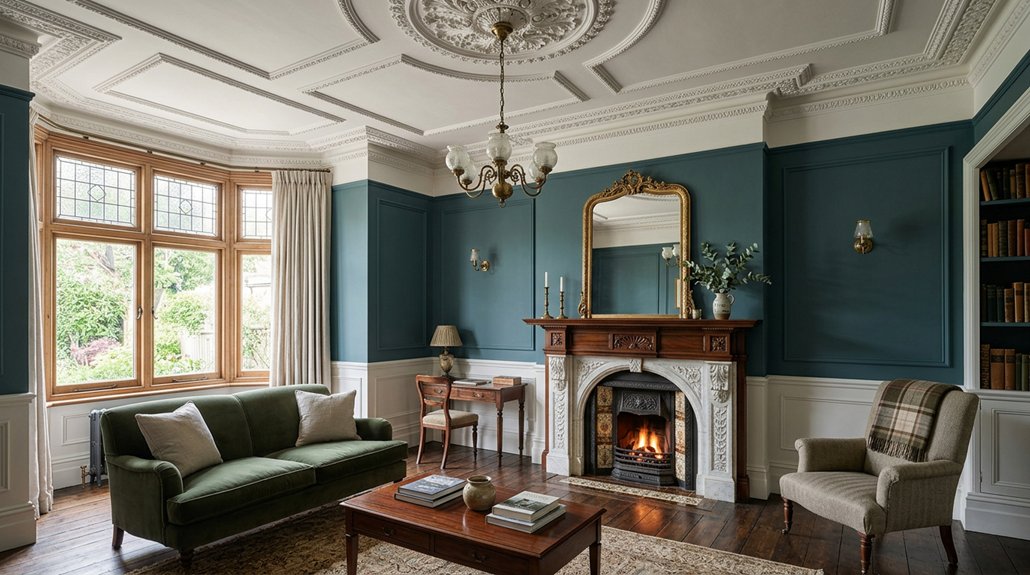
Restore Victorian features by studying them before you touch them: photograph the marble veining, cast-iron edges, carved cornices, and worn finishes, then prioritize urgent repairs. Clean fireplaces gently, preserve sound tiles and ironwork, and match only irreparable pieces. Secure loose mouldings with compatible plaster, keeping their crisp shadows intact. Choose layered colors, botanical wallpaper, and fitting floors, testing samples in changing light. Update wiring, pipes, windows, and safety discreetly, so your home feels warmer while its history stays vivid. Practical guidance can help you make every choice count.
Key Takeaways
- Inspect and photograph fireplaces, cornices, and mouldings before work, noting damage, materials, previous repairs, and original details.
- Clean fireplaces gently, test products in hidden areas, preserve sound tiles and ironwork, and replace only irreparable parts with matched materials.
- Stabilize loose cornices and repair cracks with compatible plaster; cast replacements from intact sections to match missing ornament.
- Choose period-appropriate colors, wallpaper, and flooring, testing samples in different lighting and alongside original features.
- Prioritize qualified safety upgrades and reversible improvements while preserving original details and the home’s aged character.
Inspect Victorian Features and Plan Their Restoration

Before you lift a paintbrush or pry loose a trim board, take a slow tour of your Victorian home. Let your eyes follow the crisp lines of a ceiling rose, the rippled glass in a sash, and the worn warmth of a stair rail.
Note each feature’s material, finish, damage, and location; photograph details in natural light. You’ll start to read Victorian architecture as a layered story, not a checklist of pretty patterns.
Test nothing aggressively. Instead, record loose joints, peeling coatings, damp patches, and previous repairs, then ask a preservation specialist to assess uncertain materials or structural concerns.
Gather old photographs, plans, and local records to guide Historical accuracy. Set priorities by urgency, significance, and budget, and choose compatible methods before work begins.
Your careful survey gives every restoration decision a clear, thoughtful starting point.
Restore Victorian Fireplaces While Preserving Original Details
When you restore a Victorian fireplace, let its original details lead the work: the cool veining of marble, the crisp edge of a cast-iron insert, the worn glaze on a tile.
Clean gently with suitable products, testing a hidden spot before treating the full surface. You’ll protect aged finishes while lifting soot and grime without erasing their patina.
Keep sound tiles, ironwork, and stone in place; replace only what’s beyond repair, matching material, color, and texture as closely as possible.
Historical restoration techniques can guide careful repairs, from stabilizing loose tiles to reviving metal with a restrained polish.
Avoid over-restoration: a little wear gives Victorian interior decor its depth and warmth.
Once complete, your fireplace can anchor the room with its original character intact, ready to catch the firelight again.
Repair Cornices and Period Mouldings Carefully
Though a hairline crack in a Victorian cornice may seem minor, it can signal loose plaster or a failing joint. Look closely for lifting edges, hollow sounds, and dust that sifts down like flour.
Before you repair, photograph each detail and gently remove grime with a soft brush; aggressive scraping can erase crisp leaves, beads, and curls. Secure loose sections with suitable fixings, then fill cracks using compatible plaster, pressing it firmly into the gap.
For missing ornament, take a mould from an intact section and cast a matching piece. Skilled craftsmanship techniques help you blend seams without flattening delicate relief.
Let repairs cure fully, then inspect them in raking light. This patient ornament preservation keeps the cornice’s sculpted shadows and handmade character intact, so the room retains its distinctive Victorian presence.
Choose Period-Appropriate Paint, Wallpaper and Flooring
Choose finishes that let a Victorian room’s original details lead. Build color palettes around the era’s rich, layered hues: deep green, oxblood, ochre, or smoky blue can make carved wood and plasterwork glow. Test samples in changing daylight; a shade that feels velvety at dusk may look sharp at noon.
For wallpaper patterns, consider botanical trails, damask, or fine stripes that echo your home’s character without crowding its features. Use a bold print on one wall, or wrap the room for a more immersive effect. Let the paper’s texture add quiet depth.
Choose flooring that suits the architecture, from polished timber boards to encaustic tiles in a hallway. A patterned rug can soften the grain and tie colors together. Before you commit, view every finish beside the fireplace, cornices, and existing woodwork.
Update Victorian Homes for Comfort and Safety
How can you make a Victorian home feel safer without dulling its charm? Start with a careful inspection: ask a qualified electrician to replace tired wiring, and have a plumber check aging pipes. These Modern upgrades can work quietly behind ornate plaster, preserving the room’s visual rhythm while improving daily comfort.
Layer in discreet safety measures. Fit smoke and carbon monoxide alarms, secure handrails, and add nonslip backing beneath rugs. Restore sash windows with smooth, reliable locks, then seal draughts without trapping moisture. You’ll feel the difference when warm air stays put and cold corridors soften.
Protect Historical authenticity by repairing, not stripping, original details wherever possible. Choose reversible solutions and finishes that echo the home’s palette. With thoughtful planning, you can enjoy safer evenings, steadier warmth, and every carved, timeworn detail.
Conclusion
Restore a Victorian home thoughtfully, and every detail starts to sing: the fireplace glows like a century-old hearth reborn, cornices cast elegant shadows, and period colours wrap each room in warmth. You don’t need to turn your home into a museum; preserve its character while quietly improving comfort and safety. With careful choices, you’ll bring original craftsmanship back to life—and make each doorway feel like a passage into history, without sacrificing the ease of modern living.
Leave a Reply